30Days30WaysUK

An emergency preparedness campaign on social media that connects, informs and suggests activities to boost personal resilience during "September is Preparedness Month"
1st to 30th September 2026
#30days30waysuk
Making 30Days30WaysUK into a game is important because preparedness can sometimes feel overwhelming or easy to be put off.
The Bingo Sheet is a fun and easy way to take part in the campaign throughout September. Each square features the daily activity badge linked to that days preparedness theme.
The idea is simple follow along each day, complete the activity and mark it off on your sheet as you go.
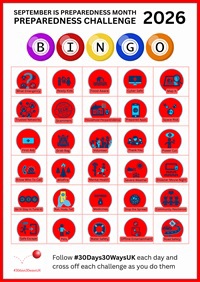
Click on the image above to download your Bingo sheet
Daily Messages
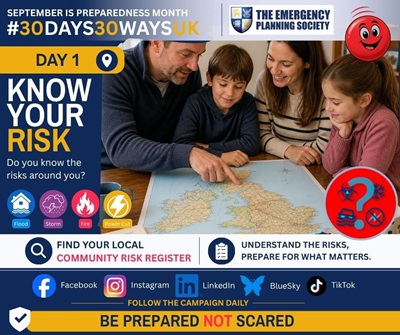
Key Messages:
Emergencies can happen with little or no warning.
Understanding local risks helps people feel more informed and in control.
Being aware of risks is the first step to being prepared.
Always heed warnings and follow official advice.
Help will arrive, but it may take some time - there is a lot people can do themselves to be better prepared.
Daily Challenge:
Find you local Community Risk Register, look at the risks and think about how these risks might affect you, your family or business.

Key Messages:
Prepare:
Save 105 in your phone to report power cuts.Follow your local network operator for updates.
Keep a power bank, torch and spare batteries ready.
Consider backup options (e.g. UPS for sensitive equipment).
Daily challenge:
Check you have battery-powered torches in a known place - and spare batteries ready.
Avoid relying on candles where possible.
Keep essential items easy to access.
Test torches and replace batteries if needed.

Key Messages:
Stay informed – Cyber crime is common, awareness is your first line of defence.
Use strong passwords – Create unique, complex passwords for each account.
Enable extra security – Use two-factor authentication wherever possible.
Keep devices updated – Regular updates help protect against known threats.
Be alert to scams – Don’t click suspicious links or open unexpected attachments.
Report concerns – Know how to report fraud or suspicious content via Action Fraud.
Daily Challenge:
Check your passwords and improve your online security.
Review whether passwords are strong and unique.
Test password strength using: https://www.security.org/how-secureis-my-password/
Update weak passwords and enable two-factor authentication where possible

Key Messages:
Space risks exist, even if they are less visible in everyday life.
The UK and international partners actively monitor and assess Near Earth Objects.
Awareness helps build understanding of how risks are managed globally.
Science and early warning systems play a key role in keeping us safe.
Look up and get involved – anyone can engage with space awareness and even contribute as a citizen scientist.
Daily Challenge:
Explore the UK Government’s National Space Strategy.
Learn how the UK is involved in space and resilience.
Discover how space risks are monitored and managed.
Reflect on how global collaboration supports safety on Earth
Further information is available at: www.gov.uk/government/publications/national-space-strategy

Key Messages:
Be #WildfireAware – always respect warnings and guidance.
If you spot a fire, stay clear and call 999 immediately.
Only use BBQs or fires in designated, authorised areas.
Fully extinguish fires and dispose of litter safely.
Never drop cigarettes or matches on the ground.
Small actions can prevent large-scale incidents.
Daily Challenge:
Check how to prevent wildfires and follow local guidance when visiting the countryside.
Look up local advice before heading outdoors.
Follow signage and restrictions.
Share what you’ve learned with others.

Key Messages:
Check your flood risk and sign up for alerts.
Save Floodline (0345 988 1188) in your phone for advice and support.
Know the three flood warning levels and what actions to take.
Never walk or drive through flood water.
Prepare a plan and protect important items in advance.
Follow guidance for safe clean-up and food safety after flooding.
For further information visit: Flooding - GOV.UK
Daily Challenge:
Check your flood risk and sign up for flood alerts if needed.
Visit official flood risk websites - Flooding - GOV.UK
Register for warnings (e.g. Floodline alerts).
Share this information with family and neighbours.

Key Messages
Pause before you share – not everything online is accurate.
Use the SHARE checklist to spot misinformation.
Check the source – is it official, verified and up to date?
Look for multiple trusted sources confirming the same information.
Be cautious of emotive or urgent messages designed to prompt quick sharing.
Report misinformation through appropriate online channels.
Help others by sharing accurate, trusted information only.
Daily Challenge
Find and follow trusted local sources of information.
Follow advice provided by your local council, LRF and emergency services.
Identify where to get verified updates during an emergency.
Review and clean up your social media feeds to prioritise trusted sources.

Key Messages
Verify identities – Always check who you’re dealing with using trusted contact details.
Be skeptical – If something seems too good to be true, it probably is.
Don’t share personal information – never give out bank details, passwords or NI numbers unless you’re certain.
Use secure websites – Look for “https://” and the padlock symbol.
Check reviews – Research companies, sellers or offers before committing.
Use strong passwords – Create unique passwords and enable two factor authentication.
Monitor your accounts – Regularly check for unusual or unauthorised activity.
Daily Challenge
Visit the Action Fraud website and explore the A–Z of fraud.
Learn about different types of scams
Share what you’ve learned with friends or family
Talk to someone who may be more vulnerable

Key Messages
Know who to call and when.
Use 999 only for life-threatening emergencies. Ask for Coastguard or Mountain Rescue via 999 when needed.
Use 101 for non-emergency Police matters.
Use NHS 111 for urgent medical advice that is not life-threatening.
Call 0800 111 999 if you suspect a gas leak.
If you can’t speak, use the Silent Solution (press 55) when prompted.
Making the wrong call can cause delays with serious consequences.
Daily Challenge
Save and note down the correct numbers to use in an emergency.
Store key numbers on your phone and share with family members.
Ensure everyone in the household knows when to use each service.
Learn the key principles of Run, Hide, Tell.

Key Messages
Look after your mental health – it’s just as important as physical health.
It’s okay not to be okay – support is available.
Recognise the signs of stress and take action early.
Stay connected – talking to someone can make a difference.
Access support locally or online when needed.
Small daily actions can improve wellbeing over time.
Daily Challenge
Do something today that makes you happy.
Take a break, get outside or connect with someone.
Reflect on what helps you feel calm or positive.
Share ideas to inspire others.

Key Messages
Always Respect the Water – conditions can change quickly.
If you fall in, remember #FloatToLive
If you see someone in trouble: Call 999
Ask for the Coastguard at the coast.
Ask for Fire and Rescue if inland.
Avoid using inflatables in open water, especially in windy conditions.
Check weather and tide conditions before heading out.
Daily Challenge
Learn the risks around water and watch the “Float to Live” video.
Understand how to respond if you fall into water.
Share the video with friends and family.
Think ahead before visiting water locations.
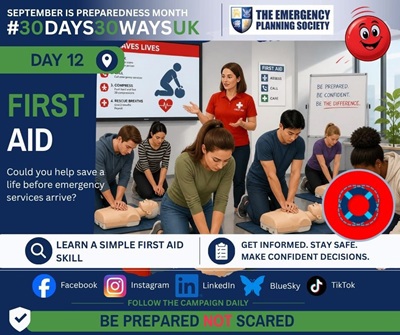
Key Messages
Anyone can learn first aid – you don’t need to be a professional.
Early action can save lives and reduce harm.
Keep your skills up to date and refresh them regularly.
Have a first aid kit available (home, travel, workplace).
The public are often the first on scene - your actions matter.
Small actions can make a big difference in an emergency.
Daily Challenge
Learn a simple first aid skill - and share it with someone else.
Watch a short tutorial or use a first aid app.
Practice a basic skill.
Teach or discuss it with family, friends or colleagues.
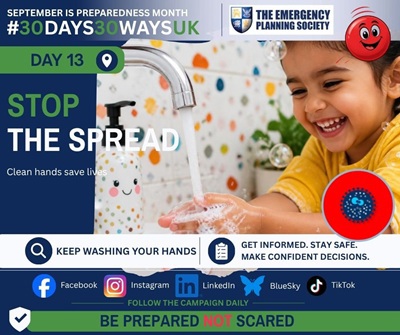
Key Messages
Clean your hands regularly – it helps save lives.
Proper hand hygiene helps prevent the spread of germs, including COVID-19 and norovirus.
Wash hands with soap and water for at least 20 seconds.
Use hand sanitiser when handwashing isn’t available.
Practise good respiratory hygiene (catch it, bin it, kill it).
Face coverings can help limit the spread of respiratory germs in certain settings.
Daily Challenge
Watch the NHS How to wash your hands video
Keep washing your hands and encourage others to do the same.
Wash hands regularly and thoroughly.
Share good hygiene habits with family, friends and colleagues.
Promote hygiene in shared spaces.
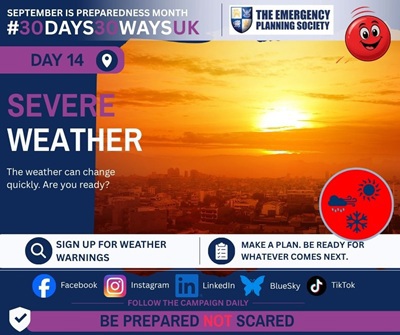
Key Messages:
Stay informed – be #WeatherReady and sign up for alerts.
Heed warnings and follow official advice.
Plan ahead – check the weather before travelling or making plans.
Take steps to protect your health and wellbeing during extreme conditions.
Check on friends, family and neighbours, especially those more vulnerable.
Be aware of warm spaces as part of winter/cold weather planning.
Stay safe during cold conditions.
Daily Challenge:
Sign up for weather warnings so you can be ready for anything.
Download weather apps and enable alerts.
Check forecasts regularly.
Share information with family and neighbours.
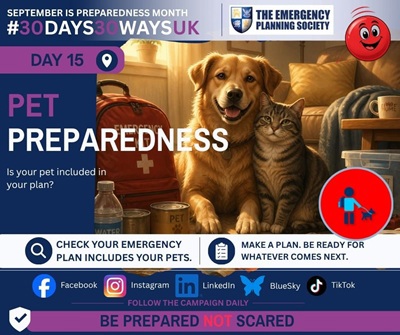
Key Messages:
Preparedness includes the animals in your care.
Add pets to your household emergency plan.
Have a pet emergency kit ready (food, water, medication, leads, carriers)
Learn basic pet first aid.
Keep identification and microchip details up to date.
Plan ahead for evacuation and temporary accommodation.
Daily Challenge:
Check your emergency plan includes your pets.
Identify someone who could look after your pets if needed.
Ensure pets are microchipped and details are up to date.
Prepare basic supplies for your animals.
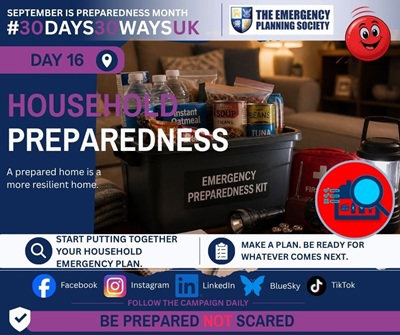
Key Messages:
Personal preparedness matters.
Get equipped, make a plan and stay informed.
Prepare both home supplies and a portable emergency kit.
Plan how to evacuate with pets or service animals if needed.
Know how and when to shut off utilities (water, gas, electricity).
Consider the needs of children, older adults and those with disabilities.
Take part in the UK Household Preparedness Survey Emergencies: How prepared are you? – Fill in form
Daily Challenge:
Start putting together your Household Emergency Plan.
Think about risks relevant to you.
Identify key contacts and meeting points.
Begin gathering essential supplies.
Key Messages:
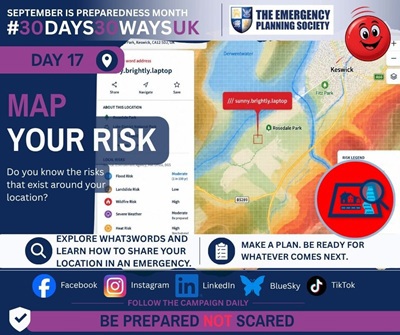
Understand your local risks by exploring maps and the Merseyside Community Risk Register Merseyside Prepared.
Knowing your location helps emergency services respond more quickly and accurately.
Use tools like What3Words to share precise locations.
Keep a digital grab bag with useful apps and offline maps.
Support and engage with local resilience and volunteer groups.
Being informed helps you prepare, respond and recover more effectively.
Daily Challenge:
Explore What3Words and learn how to share your location in an emergency.
Download and explore the app.
Identify your home or key locations.
Practice explaining your location clearly.
Key Messages:
Regular hazard checks in the home can save lives.
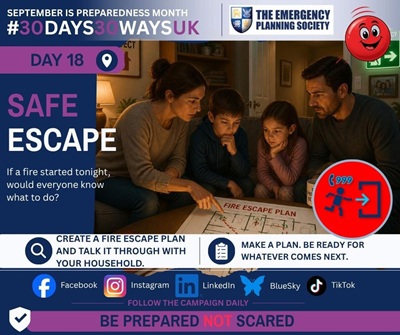
Have a fire escape plan with at least two routes. The best route is your normal route plus an alternative.
Communicate and practise your plan with everyone in the household.
In an emergency: Get out, stay out, call 999.
Never go back inside once you’ve left.
Daily Challenge:
Create a fire escape plan and talk it through with your household.
Identify primary and alternative escape routes and agree a safe meeting point outside.
Practice the plan regularly.
Specific guidance for high-rise residents:
Know your building’s evacuation plan (stay put vs evacuate). Identify escape routes and exits. Keep corridors clear. Know how to raise the alarm.
Key Messages:
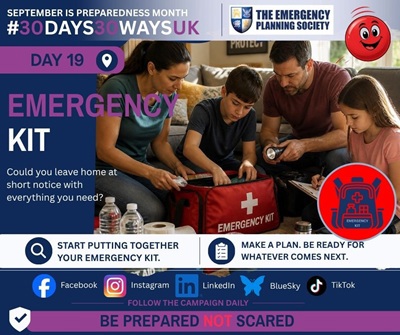
Your emergency kit should include:
Torch and spare batteries
First aid supplies
Medications and prescriptions
Copies of important documents (ID, insurance, medical records)
Cash (in case card payments are unavailable)
Multi-purpose tool and whistle (to signal for help)
Personal hygiene items
Local maps (in case digital access is limited)
Remember: tailor your kit to your household, including children, older adults, pets or specific medical needs.
Daily Challenge:
Start putting together your emergency kit and gather essential items.
Store them in an easy-to-carry bag and keep it somewhere accessible.
Key Messages:
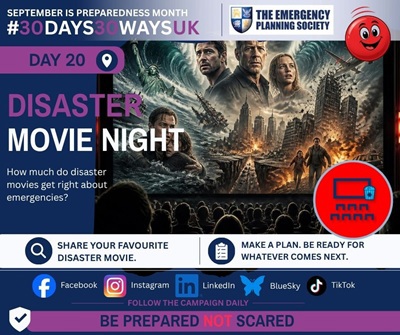
Disaster movies are entertaining - but real emergencies are very different.
Planning ahead helps you feel more confident and in control.
Knowing the risks means you’re better prepared than the characters on screen.
Ask yourself: “What would I do?”
Preparedness doesn’t have to be serious all the time - it can start with a conversation.
Daily Challenge:
Share your favourite disaster movie.
Comment or vote on your favourite film.
Share a memorable scene.
Reflect on what you would do in a similar situation.
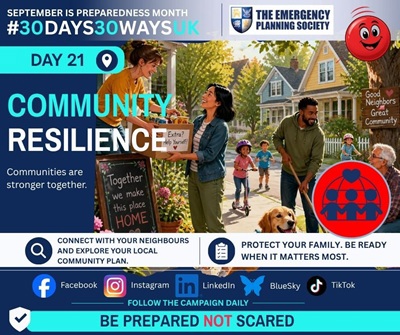
Key Messages
Strong communities are built on connection and trust.
Engage with neighbours to strengthen mutual support networks.
Community support can make a critical difference in emergencies.
Get involved in local preparedness activities and initiatives.
Sharing information locally helps everyone stay informed and prepared.
Communities are stronger together. Warm spaces and local hubs can offer support, connection and safety during difficult times. Do you know what’s available in your area?
Daily Challenge
Connect with your neighbours and explore your local community plan.
Speak to neighbours and build connections.
Find out if a community emergency plan exists.
Consider starting or joining a local group if one doesn’t exist.
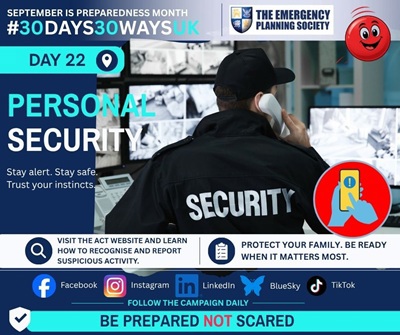
Key Messages:
Stay aware of your surroundings, especially in crowded places and events.
If something doesn’t feel right, trust your instincts.
ACT – report suspicious activity.
Call 0800 789 321 in confidence (no name required).
In an emergency, always call 999.
Staying informed helps keep you and others safe.
Daily Challenge:
Visit the ACT website and learn how to recognise and report suspicious activity.
Explore the guidance at www.gov.uk/ACT
Share what you’ve learned with others.
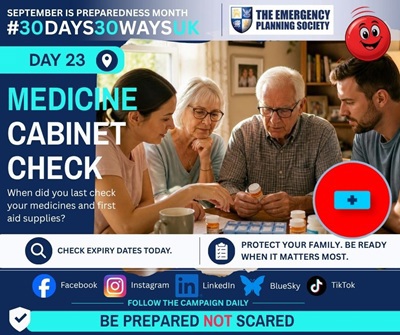
Key Messages
Review your medicines regularly to support self-care.
Only keep medicines that are in date and stored correctly.
Dispose of unused or expired medicines safely via a pharmacy.
Keep medicines out of reach of children.
Maintain a well-stocked first aid kit at home.
Follow NHS guidance on what to include in your medicine cabinet.
Daily Challenge
Check your medicine cabinet and safely dispose of anything out of date.
Review medicines and first aid supplies.
Take expired items to a pharmacy for safe disposal.
Replace essential items where needed.
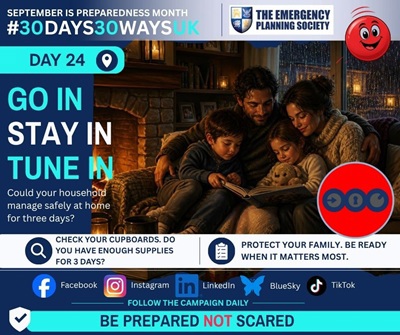
Key Messages
Personal preparedness matters.
Be ready to Go In, Stay In and Tune In when advised.
Keep at least 3 days’ worth of essential supplies.
Have both home supplies and a grab bag ready.
Stay informed through trusted sources and updates.
Get equipped, make a plan and stay informed.
Take part in the UK Household Preparedness Survey
Daily Challenge
Check your cupboards - do you have enough supplies for 3 days?
Review food, water and essential items.
Identify any gaps.
Top up supplies where needed.
Key Messages
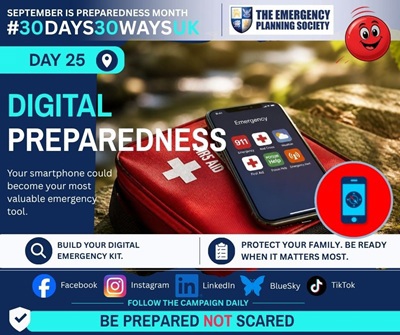
Many useful and potentially life-saving apps are available.
Build a personalised digital grab bag on your phone.
Keep your phone updated and fully charged.
Add or update ICE (In Case of Emergency) contacts.
Learn how to use “mark safe” features on social media.
Download tools that work offline where possible.
Always consider backup options (e.g. power banks).
Daily Challenge
Download apps that can help you in an emergency.
Install and explore key apps.
Set up notifications and permissions.
Ensure they know how to use them.
Key Messages
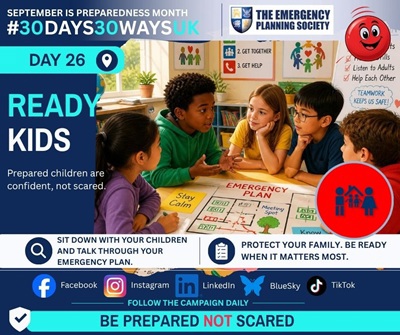
Keep messaging positive, reassuring and age-appropriate.
Avoid fear - focus on confidence and empowerment.
Encourage family conversations and shared learning.
Reinforce that preparedness can be engaging and even fun.
Daily Challenge
Sit down with your children and talk through your emergency plan.
Explain what to do in simple, age-appropriate ways.
Practice key actions (e.g. who to call, where to go).
Reassure children and answer questions.
Key Messages
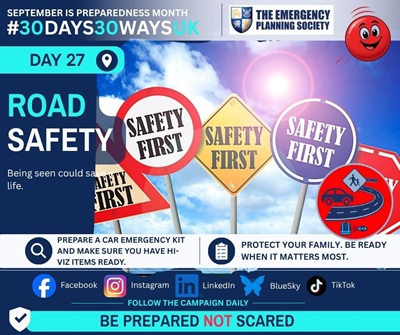
Hi-vis items are affordable and can save lives.
Wear reflective clothing when walking, cycling or running.
Bright colours alone are not enough - use fluorescent and reflective materials.
Think about visibility for adults, children and pets.
Always wear hi-vis when stopped at the roadside.
Prepare for darker evenings and poor weather conditions.
Daily Challenge
Prepare a car emergency kit and make sure you have hi-vis items ready.
Keep a hi-vis vest in your vehicle.
Prepare a basic car grab bag (torch, blanket, etc.).
Wear reflective clothing when out in low light.
Key Messages:
Disruptions can mean waiting and limited access to services.
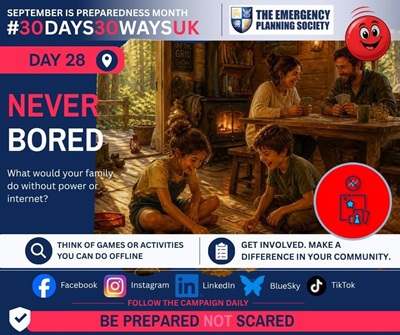
Plan ahead to include offline entertainment and comfort items.
Activities can help reduce stress and frustration.
Think about what works for your household - children and adults alike.
Preparedness is also about wellbeing and staying positive.
Daily Challenge:
What would you do without the internet?
Think of games or activities you and your children can do offline.
Share ideas with friends or family.
Add entertainment items to your emergency kit.
Key Messages:
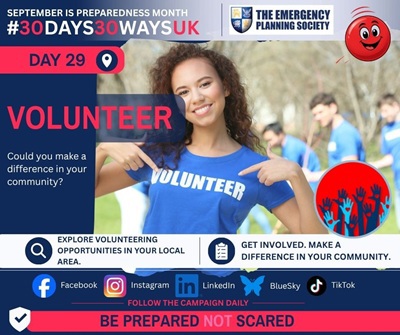
Volunteers are essential to community resilience and preparedness.
Local organisations make a huge difference before, during and after emergencies.
There are opportunities for everyone to get involved.
Volunteering builds skills, confidence and community connections
Find and sign up with an organisation near you.
Daily Challenge:
Explore volunteering opportunities in your local area.
Search for local organisations or groups.
Learn about different roles available.
Take the first step towards getting involved.
Key Messages:
Preparedness is ongoing – keep building on what you’ve learned.
Take part in the UK Household Preparedness Survey.
Your feedback helps improve future campaigns.
Small actions taken today can make a big difference tomorrow.
Thank you for taking part – see you next year.
Daily Challenge:
Complete the UK Household Preparedness Survey.
Share your feedback.
Reflect on what you’ve learned.
Continue your preparedness journey.